
_edited.png)
Reading the Customer’s Mind: How to Tell If They’re About to Buy
- Emmanuel Rivera
- Mar 15
- 3 min read

Imagine walking into a store just to browse.
You touch a few items. You check the price tag. You walk away… then come back again.
To most people, this looks like casual shopping.
But to trained marketers and retailers, these behaviors are powerful buying signals.
Customers rarely say, “I’m about to buy this.” Instead, they reveal their intent through subtle actions: how long they stay, what they touch, what they compare, and what they keep returning to.
Businesses that understand these signals can respond at exactly the right moment, when the customer is closest to making a purchase. Let’s break down the most important signs.

When customers first enter a store, they usually move quickly while scanning the environment.
But once something captures their interest, their behavior changes.
They slow down.They pause.They start exploring.
This shift from fast scanning to slower browsing indicates that curiosity has been triggered. At this stage, the customer is mentally shifting from “just looking” to “considering.”
Retailers often design displays, lighting, and product layouts to create these slow-down zones because the longer customers stay in a space, the more likely they are to evaluate a product.
In retail psychology according to one study, time spent near a product is strongly associated with purchase probability because longer evaluation often signals growing interest.

One of the strongest buying signals is touch.
When customers pick up a product, feel the texture, or inspect it closely, they begin imagining what it would be like to own it. Researchers call this the “endowment effect.”
A study published in the Journal of Consumer Research found that simply touching a product can increase feelings of ownership and make people willing to pay more for it.
In other words, when customers hold something, even briefly, it starts to feel like it already belongs to them.
This is why many successful stores encourage customers to:
Try products
Test demos
Sample food
Hold display items
Because the moment a customer interacts with a product physically, the psychological distance between them and the purchase shrinks.
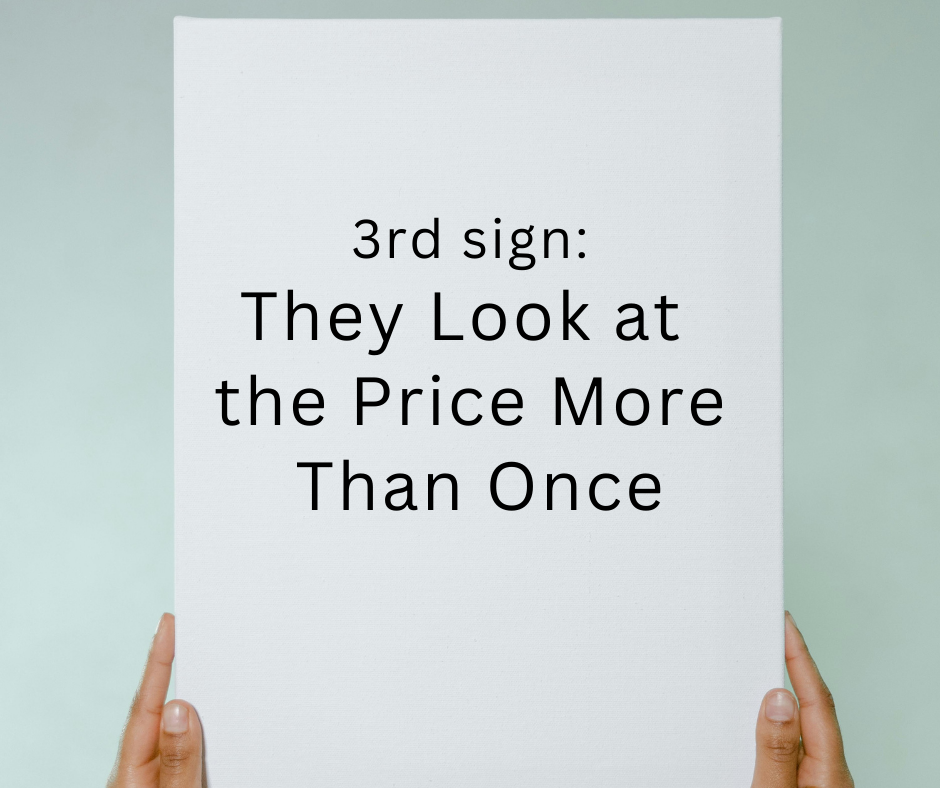
Many people assume price-checking means hesitation.
But in reality, repeatedly checking the price often means the opposite.
It signals that the customer is evaluating value.
They are asking themselves:
Is this worth it?
Do I need this now?
Can I justify this purchase?
When customers repeatedly look at the price tag, they are already engaged in a mental decision process. This is the moment where helpful information like promotions, bundles, or clear product benefits can remove the final barrier.
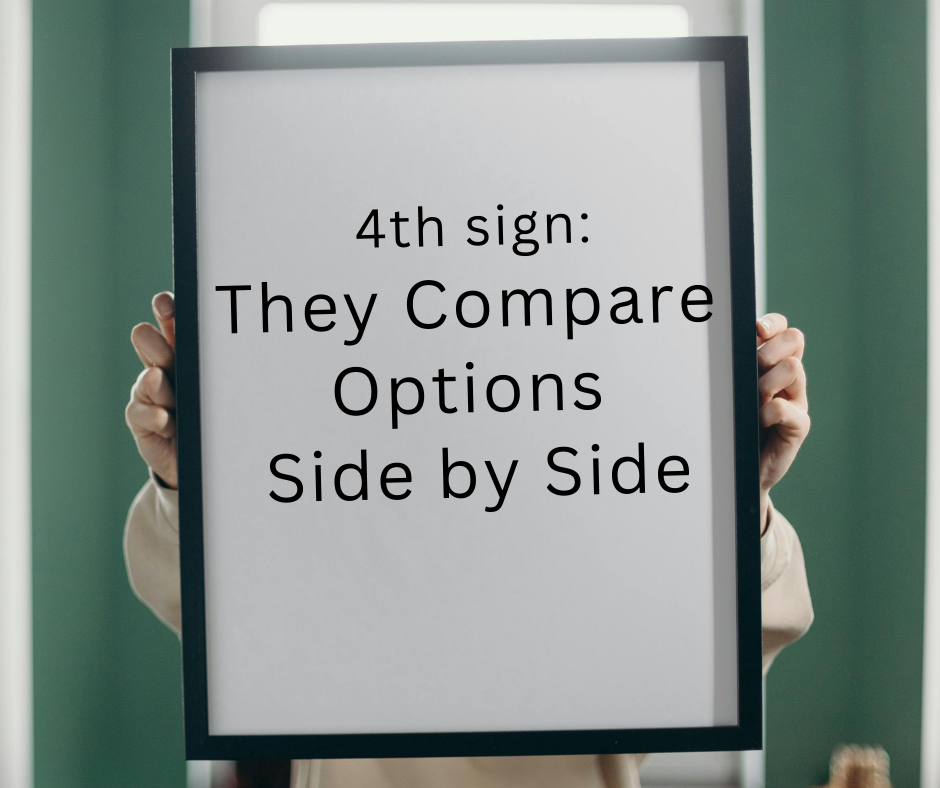
Another strong buying signal is comparison behavior.
Customers who hold two products together, read labels, or go back and forth between shelves are not just browsing anymore.They are narrowing down their decision. At this stage, they are usually deciding which product to buy, not whether to buy at all.
Providing clear product descriptions, comparison charts, or helpful staff guidance can dramatically speed up this decision. Because once customers start comparing, they’ve already mentally committed to the purchase category.

One of the clearest signs of buying intent is when customers leave a product but come back to it later.
They might:
Walk around the store
Look at other items
Then return to the same display
Retail researchers call this “looping behavior.” It happens when a product sticks in the customer’s mind long enough that they feel compelled to take another look.
Often, customers who revisit a product are very close to making the final decision.
Why Understanding These Signals Matters
The best marketers and retailers don’t just wait for customers to buy. They observe behavior and anticipate intent. By recognizing signals like:
✔️ slowing down
✔️ touching products
✔️ checking prices
✔️ comparing options
✔️ revisiting displays
Businesses can identify the exact moment when customers are closest to purchasing.
And at that moment, even subtle details can influence the final decision:
✔️ store layout
✔️ product displays
✔️ helpful staff interaction
✔️ promotions
✔️ even background music
Because customers rarely say what they’re thinking.
But if you pay attention to their behavior, their actions reveal everything.


Comments